Aruba or Curaçao: which destination is right for you?
Aruba and Curaçao are often mentioned in the same breath, and for good reason: both are Dutch Caribbean islands, located outside the hurricane belt, and enjoy sunshine year-round. But anyone who has visited both knows that the vacation experience is quite different. This article highlights the key differences.
Aruba and Curaçao in a nutshell
Aruba: Papiamento, Dutch, English, and Spanish are spoken here. Surface area approximately 180 km². Flight time from Amsterdam approximately 10.5 hours (direct). Official currency is the US dollar. Located outside the hurricane belt. Atmosphere: busier, more Americanized, casinos.
Curaçao: The same languages are spoken: Papiamentu, Dutch, English, and Spanish. Surface area approximately 444 km², more than twice the size of Aruba. Flight time from Amsterdam approximately 9.5 hours (direct). Currency is the Caribbean guilder (XCG), though dollars are widely accepted. Also located outside the hurricane belt. Atmosphere: smaller-scale, more diverse, more local vibe.
Difference in beaches
Aruba is primarily known for Eagle Beach and Palm Beach: long, wide, straight sandy beaches on the west coast, often with large resort chains directly on the shore. It is photogenic and easily accessible, but the beaches look very similar to one each other.
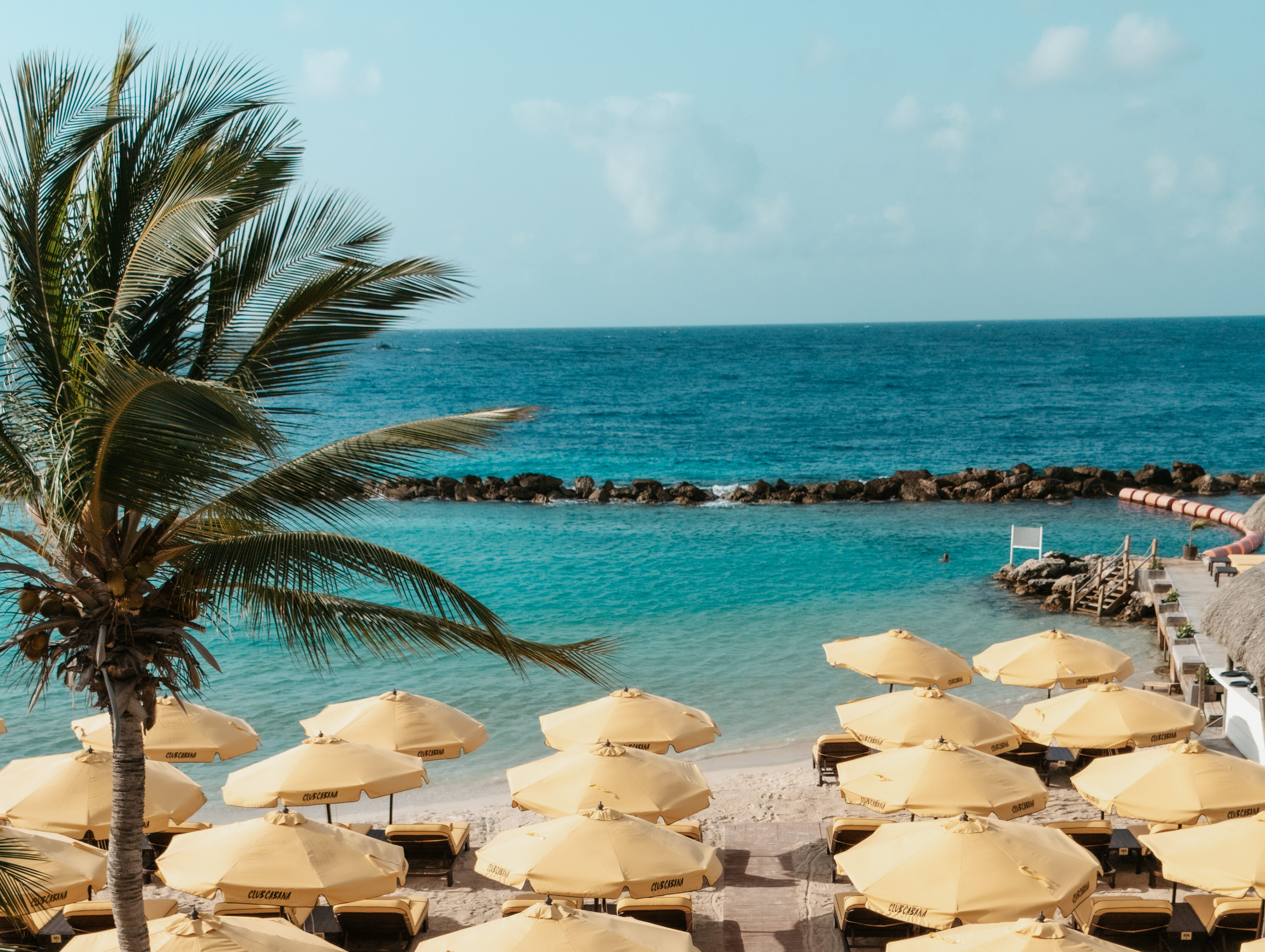
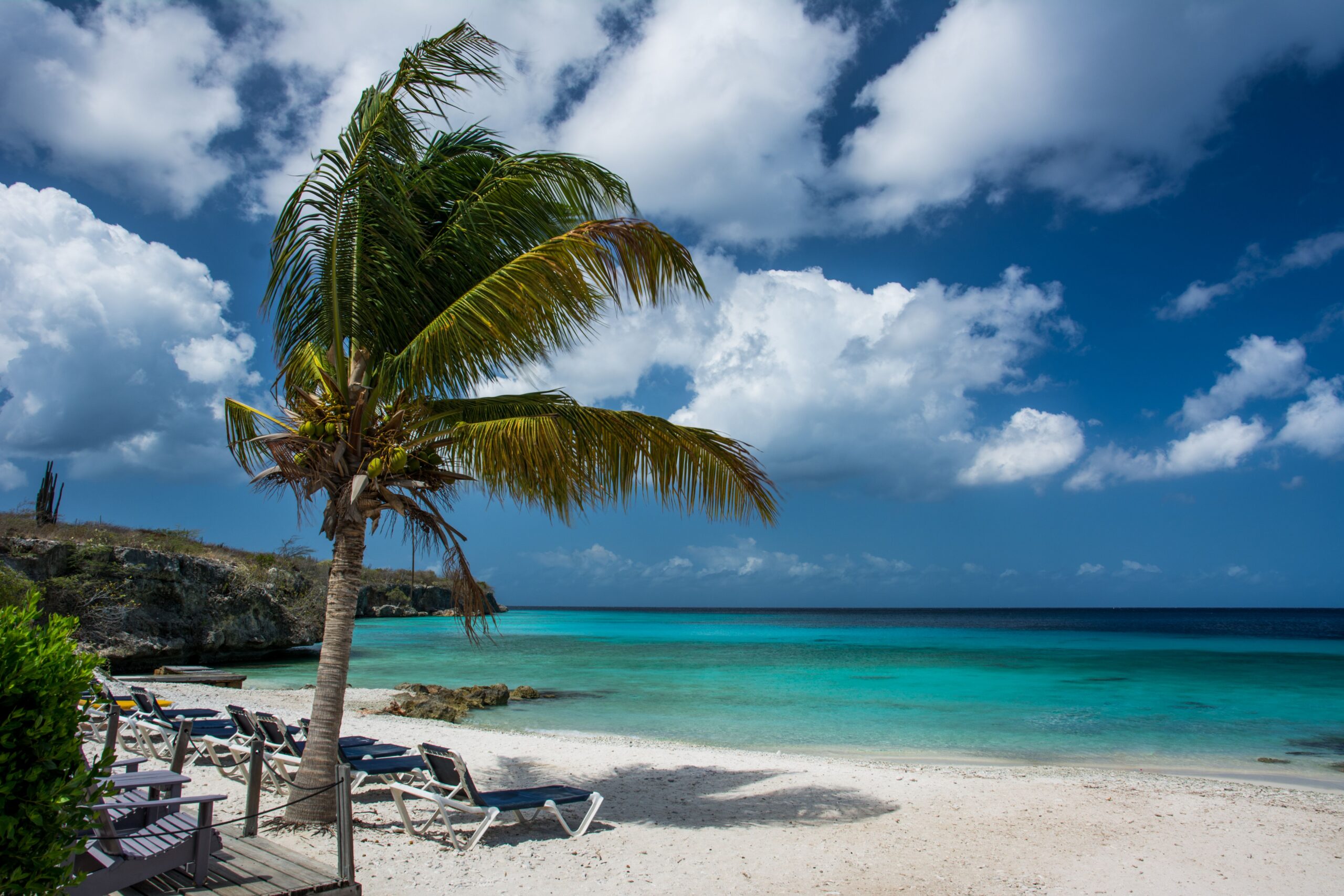
Curaçao has a completely different setup: more than 35 beaches spread across the entire island, with much more variety. From the lively Mambo Beach to hidden coves like Playa Lagun on the west coast. If you like to switch beaches and experience different vibes within one vacation, Curaçao is the better choice. (A full overview can be found in our guide to the most beautiful beaches in Curaçao.)
A well-known side note: Aruba is famous for its constant trade winds, which are great for windsurfers but sometimes less pleasant for those seeking a calm day on the beach. Curaçao generally has more sheltered, calm bays on the south coast.
Atmosphere and development
Aruba’s coast at Palm Beach and Oranjestad is highly developed: high-rise resort towers, casinos, and a distinct American tourist character, partly due to its proximity to the United States. For those who love an all-inclusive resort experience with many amenities in one place, this is a major plus.
Curaçao feels smaller-scale and more diverse. The capital, Willemstad, is a UNESCO World Heritage site, featuring colorful colonial facades along the St. Anna Bay and the Punda and Otrobanda districts. Outside the tourist core, the island quickly feels more authentic: local food stalls, small fishing villages, and a landscape of cacti and limestone cliffs that differs greatly from the sleekly developed Aruba.
Diving and snorkeling: where does Curaçao win?
This is where the difference is most apparent. Curaçao is known worldwide as a top destination for divers, with a protected underwater park and dozens of dive sites accessible directly from the beach. Aruba also has good dive sites (including wrecks like the Antilla), but the island is generally less focused on diving than on beaches and nightlife.
For those who have snorkeling and diving high on their list, Curaçao is the more logical choice.
For whom is Aruba the best choice?
- You want a large, all-inclusive resort experience with casinos and extensive entertainment.
- You love long, wide beaches with plenty of wind sports.
- You are traveling from the US and want a short flight.
For whom is Curaçao the best choice?
- You want variety: different beaches, a UNESCO capital, and nature like Christoffel Park.
- Diving or snorkeling is high on your list.
- You prefer a smaller-scale, more personal stay over a large resort tower.
- You are traveling with a family and want calm, shallow beaches close to restaurants and amenities. (See also our guide for a family vacation in Curaçao)
Price: which island is more affordable?
Both islands offer a wide price spectrum, but Aruba’s large resort chains at Palm Beach are typically among the more expensive options in the region. In addition to luxury resorts, Curaçao has many small-scale bungalow resorts and boutique accommodations, making it slightly more accessible on average for those who value space and a private kitchen without paying the price of a large resort chain.
Frequently asked questions
Which is more beautiful: Aruba or Curaçao?
That is subjective. Aruba has longer, more uniform sandy beaches; Curaçao has more variety in beaches, landscape, and culture. Those looking for variety often choose Curaçao.
Which island is better for diving, Aruba or Curaçao?
Curaçao is generally considered the stronger diving destination, with more accessible reefs directly from the beach and a protected underwater park.
Is Curaçao cheaper than Aruba?
Curaçao has more small-scale and mid-range accommodations on average, while Aruba’s coast at Palm Beach is dominated by larger, pricier resort chains. This makes Curaçao the more affordable option for many travelers.
Are Aruba and Curaçao both safe?
Yes, both Dutch Caribbean islands are considered relatively safe within the region. You can read more specifically about Curaçao in our safety guide.
Can I combine Aruba and Curaçao in one trip?
It is possible, with a short flight between the islands, but most travelers choose one island per vacation to ensure they have enough time.
Conclusion
There is no wrong answer: Aruba and Curaçao are both excellent Caribbean destinations, but with different characters. Aruba is the choice for those who love large resorts, long beaches, and American allure. Curaçao is the choice for those seeking variety: from world-class diving to a UNESCO capital and quiet, hidden coves.
Choosing Curaçao? Then your vacation starts a 2-minute walk from Mambo Beach, at Bon Bini Resort. View the bungalows or check availability.